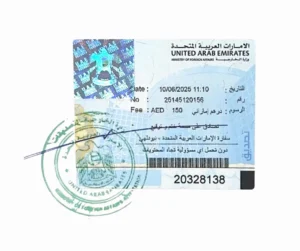
Foreign Power of Attorney in the UAE: When Is MOFA Attestation Mandatory?
Not every foreign-issued Power of Attorney needs to go through MOFA attestation before it can be used in the UAE — but a large share of them do, and getting it wrong in either direction causes problems. Skip a required attestation and a bank, developer, or court clerk will simply turn the document away. Attest one that didn’t strictly need it and you’ve spent time and money on a step that wasn’t necessary.
This guide covers when MOFA attestation of a foreign POA is genuinely mandatory in the UAE, when notarization alone may be enough, and — most importantly — how to find out for certain before you rely on either assumption.
Situations Where UAE Authorities Require MOFA Attestation of a Foreign POA
As a general pattern, the more formal or regulated the receiving authority, the more likely it is to insist on full MOFA attestation rather than accept a merely notarized foreign document. That typically includes:
Dubai Land Department transactions. Selling, buying, or transferring property through an attorney appointed abroad almost always requires an attested POA before DLD will register the transaction.
UAE court and litigation matters. Courts generally expect a foreign POA authorizing a lawyer or representative to be fully attested before they will recognize it.
Banking and financial transactions. Banks handling account openings, large transfers, or account closures on behalf of an absent account holder typically require attestation as part of their own compliance checks.
Company formation and corporate actions. Registering a company, signing on a business’s behalf, or making formal corporate changes through a foreign-appointed representative usually needs an attested POA (and, if the POA is corporate in nature, an attested board resolution to go with it).
In each of these cases, MOFA attestation isn’t a formality — it’s usually a hard prerequisite the receiving authority checks before proceeding.
Situations Where Notarization Alone May Suffice — and the Risk of Assuming So
Some informal, private-party arrangements — for instance, a limited authorization between individuals that never passes through a government department, bank, or court — may in practice be accepted without full attestation, simply because no formal authority is checking its provenance.
The risk is treating this as a general rule rather than an exception. It’s common for someone to assume a notarized POA will be “good enough” for a bank or the Land Department, only to have it rejected at the counter after the document has already been translated, couriered, or relied on for a time-sensitive transaction. Because individual banks, government departments, and courts each set their own acceptance standards, assuming attestation isn’t needed is a considerably riskier bet than the reverse.
How to Check Requirements with the Receiving Authority First
Before starting — or skipping — the attestation process, it’s worth confirming directly with whoever will actually be relying on the POA:
Ask the specific department, not just the institution. A bank’s compliance team, a specific DLD service centre, or a court clerk’s office can usually tell you their own documentation requirement for the transaction you have in mind.
Get it in writing where possible. An email or written confirmation of what’s required avoids relying on a verbal answer that a different staff member later contradicts.
When in doubt, attest it. A fully MOFA-attested POA is accepted essentially everywhere a notarized-only one might not be, so if you can’t get a clear answer in time, completing the full chain is the safer default.
Dunes can also help you check what a specific receiving authority is likely to require before you commit time and money to the attestation process.
PEOPLE TRUST
We Are Best


Approved by Ministry of Justice

24x7 Hours Customer Support

Free Pickup &
Delivery

How to Get Started
If you’re not sure whether your foreign Power of Attorney needs MOFA attestation before it can be used in the UAE, read our companion guide on what the full attestation process for a foreign-issued POA involves, or get in touch with Dunes and we’ll help you confirm the exact requirement with the receiving authority before you start. Contact us to get started.
How do I know if my foreign POA needs MOFA attestation?
The safest way is to ask the specific bank, government department, or court that will be relying on the document, since each sets its own acceptance standard. As a general pattern, formal transactions such as property, banking, court matters, and company actions almost always require full attestation, while some informal private arrangements may not.
What happens if I use a foreign POA without MOFA attestation?
A UAE bank, the Dubai Land Department, or a court is entitled to simply reject an unattested foreign POA, which can cause significant delays if you discover this only after relying on the document for a time-sensitive transaction. It is best to confirm the requirement in advance rather than find out at the counter.
Is it ever a problem to attest a POA that didn’t strictly need it?
Not usually — a fully attested POA is accepted essentially everywhere a merely notarized one might be, so attesting when it turns out not to have been strictly required mainly costs extra time and a service fee rather than causing a rejection.
Can Dunes help me figure out what my specific situation requires?
Yes — Dunes can help you check what a specific bank, department, or court is likely to require for your document before you commit to the attestation process, and can then manage the attestation chain end to end if it turns out to be needed.