Do You Need a Sworn Legal Translator for MOFA-Bound Documents in Dubai?
This guide explains what the UAE actually requires instead of a “sworn” translator, which documents this applies to, what can go wrong if you skip it, and how to check a translator’s credentials before you rely on them for a MOFA-bound document.
What “Sworn” or “Legal” Translator Actually Means in the UAE
“Sworn translator” is a term borrowed from legal systems in countries such as Spain, Germany, and France, where a translator takes an oath before a court and is then authorized to certify their own translations. The UAE does not use this exact system. Instead, the country regulates the profession through Federal Decree-Law No. 22 of 2022 Regulating the Translation Profession, which came into effect in January 2023.
Under this law, the Ministry of Justice registers and licenses individuals as legal translators. An MOJ-licensed legal translator is the closest equivalent the UAE has to a “sworn” translator elsewhere — someone formally authorized to produce translations that UAE courts, government departments, and MOFA will accept as legally valid, complete with a stamp and license reference on the translated document. If you are trying to understand where this sits next to terms like “certified translation,” our guide to legal versus certified translation in the UAE breaks down the distinction in more detail.
Which Documents Actually Require a Licensed Legal Translator
Not every translation in the UAE needs to come from an MOJ-licensed translator — but anything heading toward MOFA attestation, a court file, or a government department almost always does. This typically includes birth, marriage, and death certificates; educational certificates and transcripts; powers of attorney; court judgments and legal contracts; and corporate documents such as trade licenses or board resolutions when they are being submitted for attestation or legalization.
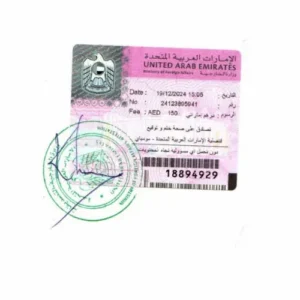
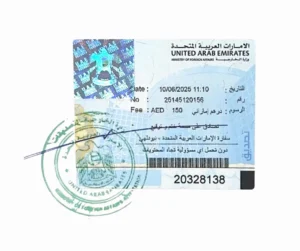
MOFA’s own attestation process reflects this: for courier-based attestation, the ministry requires the original document in Arabic or English, or accompanied by a legally certified translation. In practice, that “legally certified translation” means a translation from a licensed legal translator — not a bilingual friend, an online translation tool, or an uncertified freelancer, however accurate the wording might be. Informal, everyday translation — a menu, a personal email, in-house notes — does not carry this requirement; the line is drawn at documents that need to hold legal or official weight.
The Risk of Using an Unlicensed Translator
Submitting a translation from an unlicensed translator is one of the more common reasons a MOFA-bound document gets rejected or sent back for correction. Even a translation that reads perfectly well in Arabic can be refused if it does not carry the right stamp, license reference, or translator registration — because the receiving authority is checking for a credential, not just a correct sentence.
This also applies to translations completed outside the UAE. A certified or sworn translation produced by a qualified professional in another country is generally not accepted as-is for UAE attestation purposes; it typically needs to be redone locally by an MOJ-licensed legal translator once the underlying document itself has been through the correct attestation chain in its country of origin. Getting this step wrong does not just cost the price of a second translation — it can delay a visa application, a court filing, or a business deadline that was already tight.
How to Verify a Translator’s License Before You Submit
Before you hand over a document for translation, it is worth taking a few minutes to confirm the translator’s credentials rather than finding out after MOFA rejects it. Ask directly whether the translator or translation office is licensed by the Ministry of Justice, and check that the finished translation carries a visible stamp and license reference — not just a signature or a company logo. A translation without these details is a strong signal it will not be accepted.
The simplest way to avoid the guesswork altogether is to work with an established legal translation and attestation provider that already employs MOJ-licensed translators and handles the sequencing of translation, notarization, and MOFA attestation as one process. That is exactly the gap an experienced partner like Dunes is built to close — so you are not left verifying credentials document by document on your own.
PEOPLE TRUST
We Are Best


Approved by Ministry of Justice

24x7 Hours Customer Support

Free Pickup &
Delivery

How to Get Started
Is a “sworn translator” the same thing as a legal translator in the UAE?
Not exactly. “Sworn translator” is a status used in some other countries’ legal systems. In the UAE, the equivalent is an MOJ-licensed legal translator — someone registered with the Ministry of Justice under Federal Decree-Law No. 22 of 2022 and authorized to produce translations that carry legal weight with courts, government departments, and MOFA.
Can I use a certified translation from my home country for MOFA attestation?
Generally, no. Even a properly certified or sworn translation completed abroad is typically not accepted as-is for UAE attestation purposes. It usually needs to be redone in the UAE by an MOJ-licensed legal translator, after the original document has been through the correct attestation chain in its country of origin.
What happens if MOFA rejects my translation?
The document is sent back, and you will need a corrected translation — usually from an MOJ-licensed legal translator — before resubmitting. This adds time to the process, so it is worth confirming a translator’s license upfront. Exact turnaround for a resubmission depends on the document and current processing volumes, so it is best to check current timelines directly with MOFA or with Dunes.
How do I know if my specific document needs a licensed legal translator?
As a general rule, any document heading toward MOFA attestation, a UAE court, or a government department needs a translation from an MOJ-licensed legal translator. If you are not sure where your document falls, reach out to Dunes and we can confirm before you arrange a translation.